Humara · 2023–2026
Designing an AI sales agent before the patterns existed
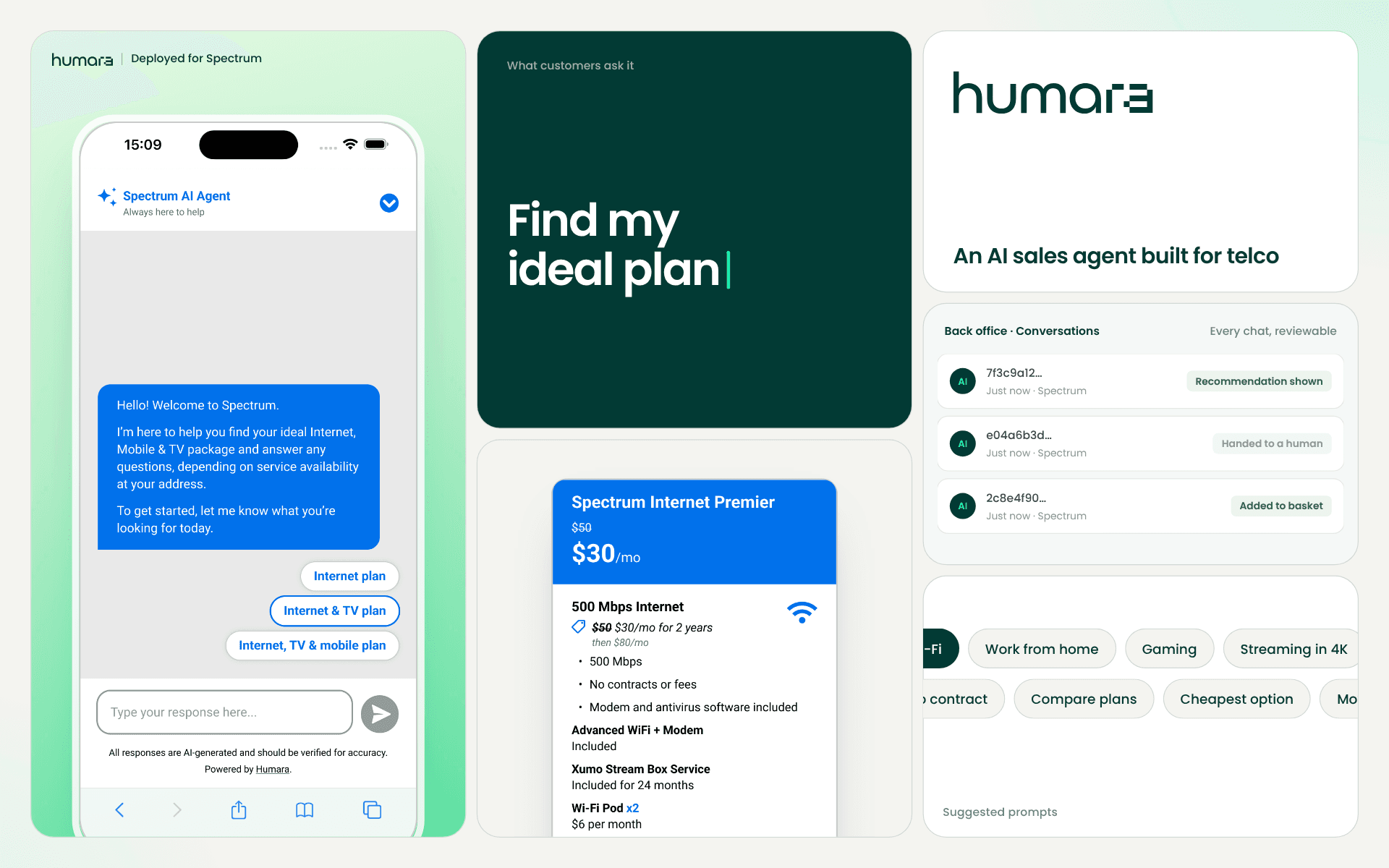
Humara’s AI sales agent helps shoppers choose a broadband plan on provider sites like Spectrum, with telcos as the next goal. Designing it was a team effort. My focus was engagement: how the agent shows up on a brand’s page and gets people talking.
What it was
For years, 15gifts sold a Guided Selling Engine, a tool that helped shoppers on telco and media sites find the right product. When LLMs took off, that started to look like yesterday’s answer. Our CEO decided the bigger risk was standing still, so we pivoted to an AI sales agent and renamed the company Humara.
What I learned
Belonging on the page beats being noticed
A sales agent lives on someone else’s website. The brand built the page and owns the experience. The agent is a guest, and a bad guest is the first thing people close.
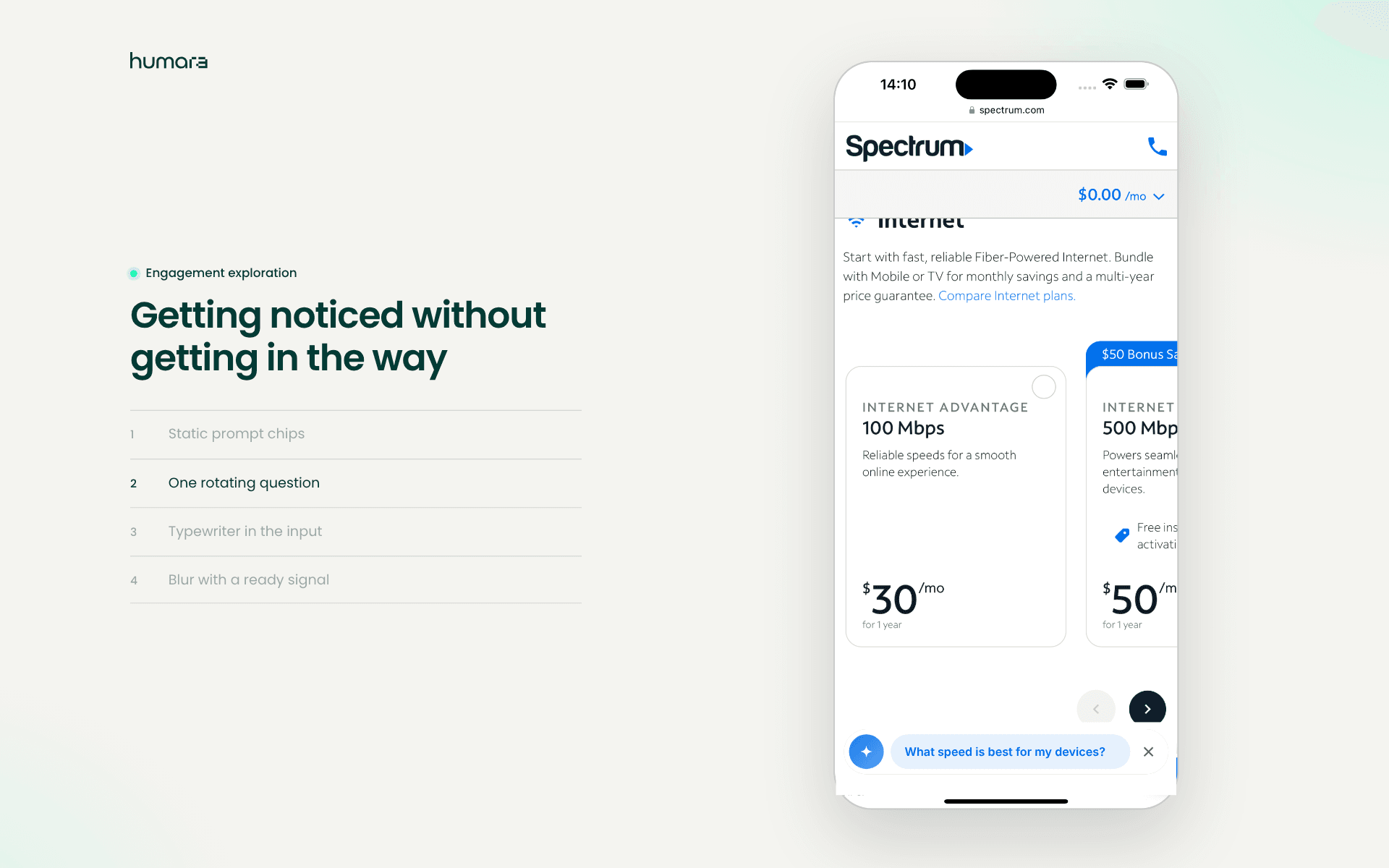
I tried embedded engagement, floating engagement and most variations in between. Every option got the same question: does this feel like it belongs here? Proactive was the goal. In your face was the failure.
Floating engagement won, with static prompt chips as the alternative. It was the least intrusive option on brands’ pages, and it still performed best in testing.
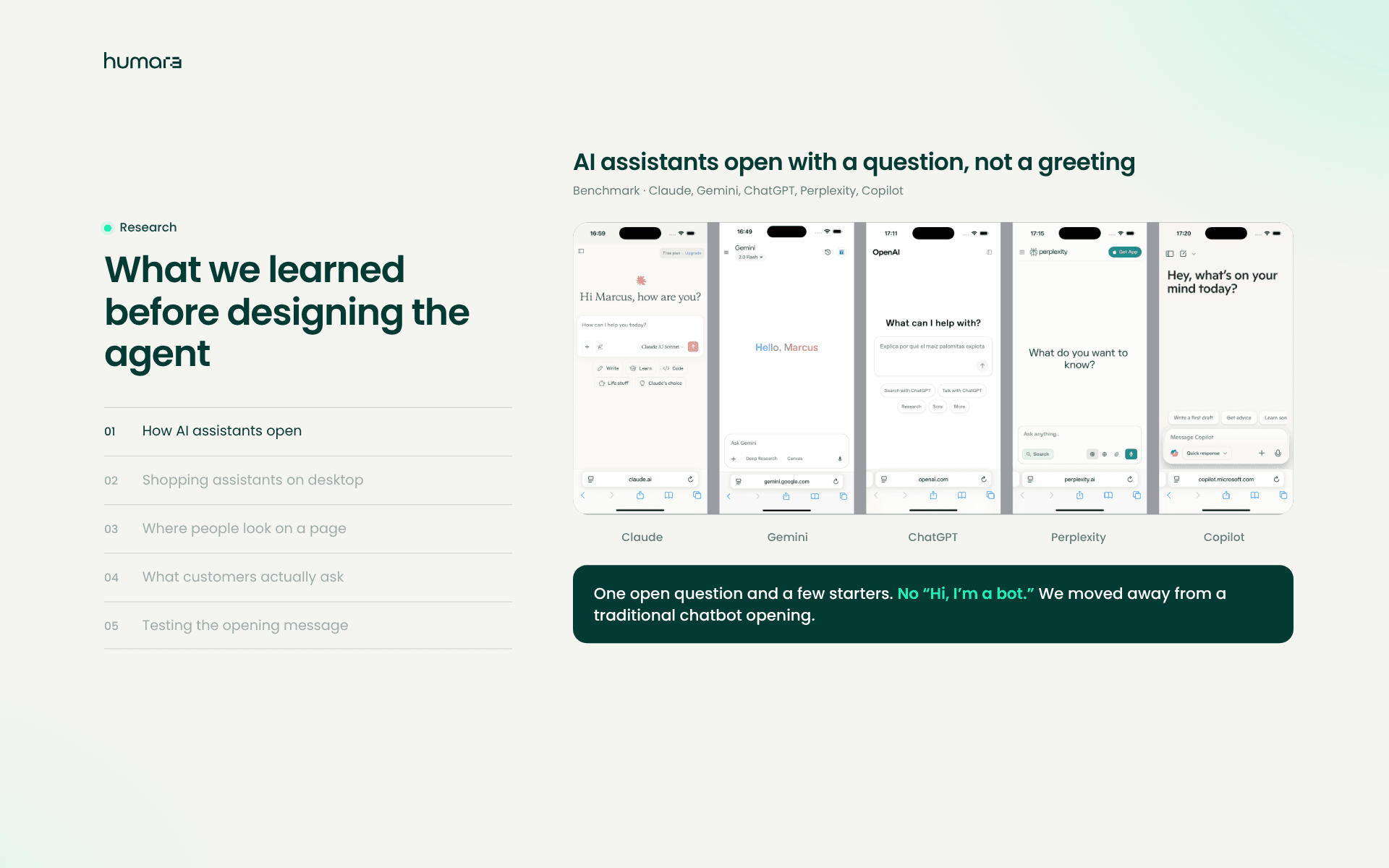
The same thinking shaped the first message. Typing a question to a stranger on a shopping site feels like effort, so we gave people tappable answers instead. In our first split test, the opening message rate went up 58.1%, and 81% of people picked a pre-set answer rather than typing. They kept going, too. The share of people sending three or more messages went up 40.2%.
Unpredictable isn’t the same as patternless
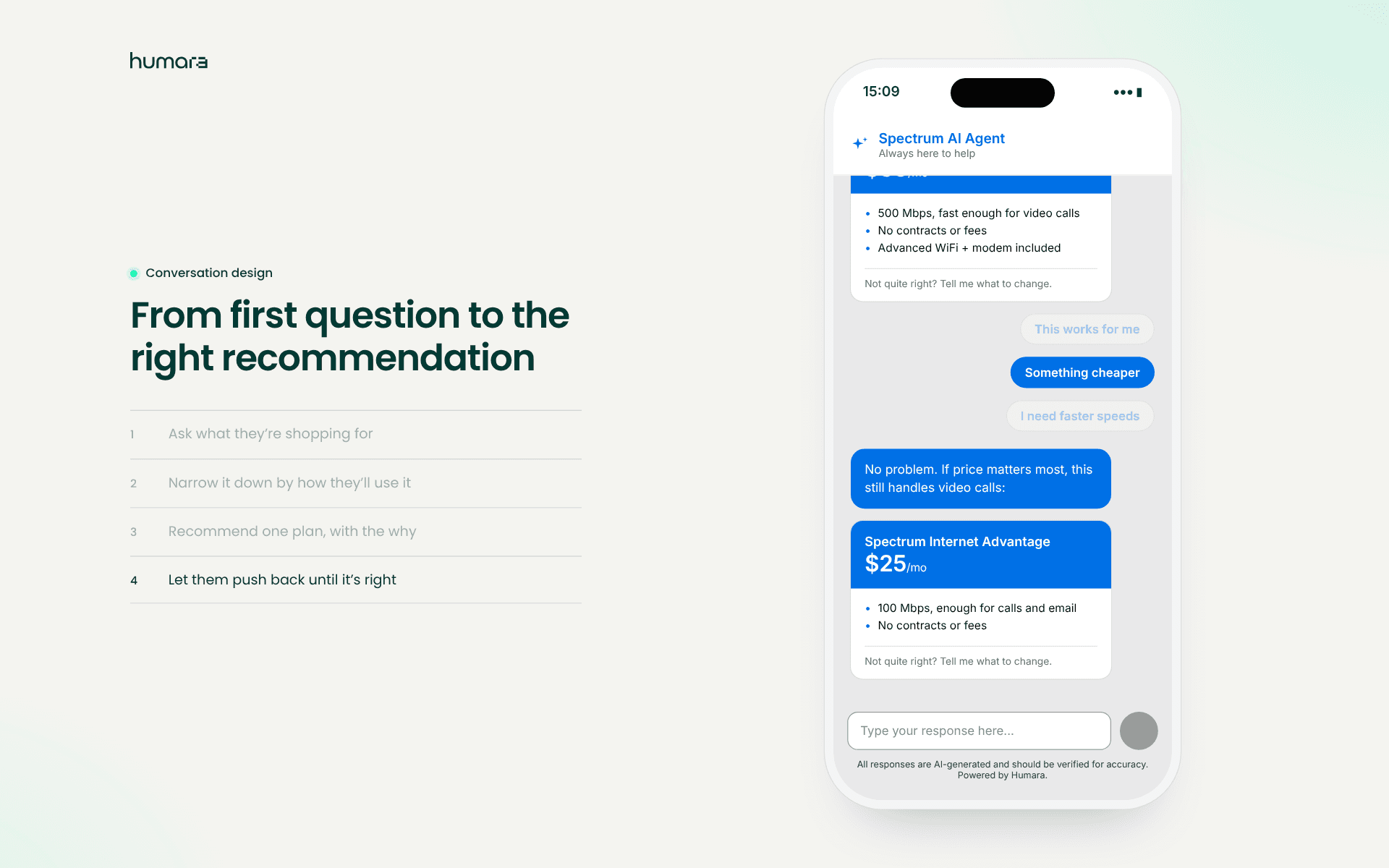
The obvious question was how you design for something you can’t predict. You can’t design every response. You can design the conversation.
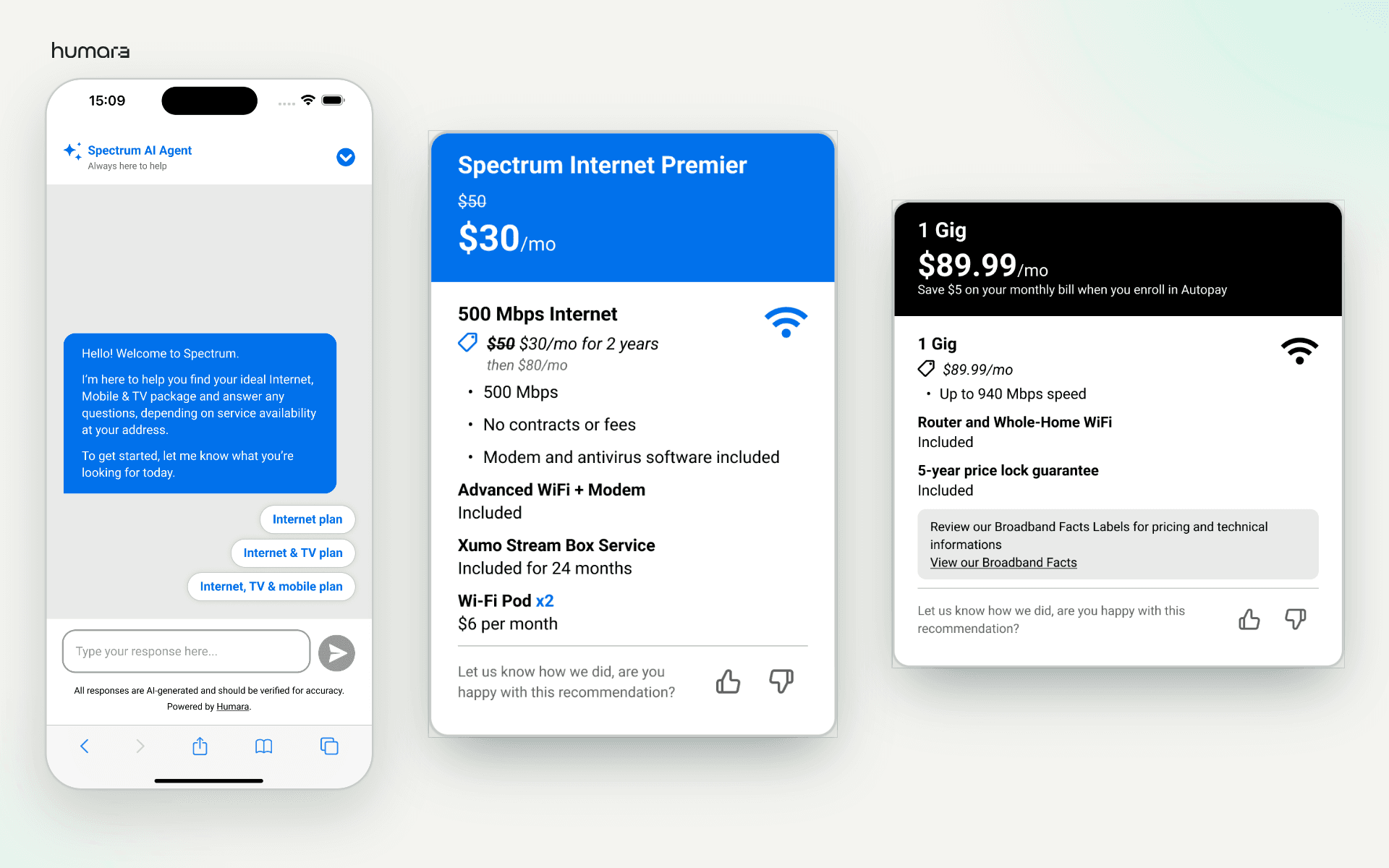
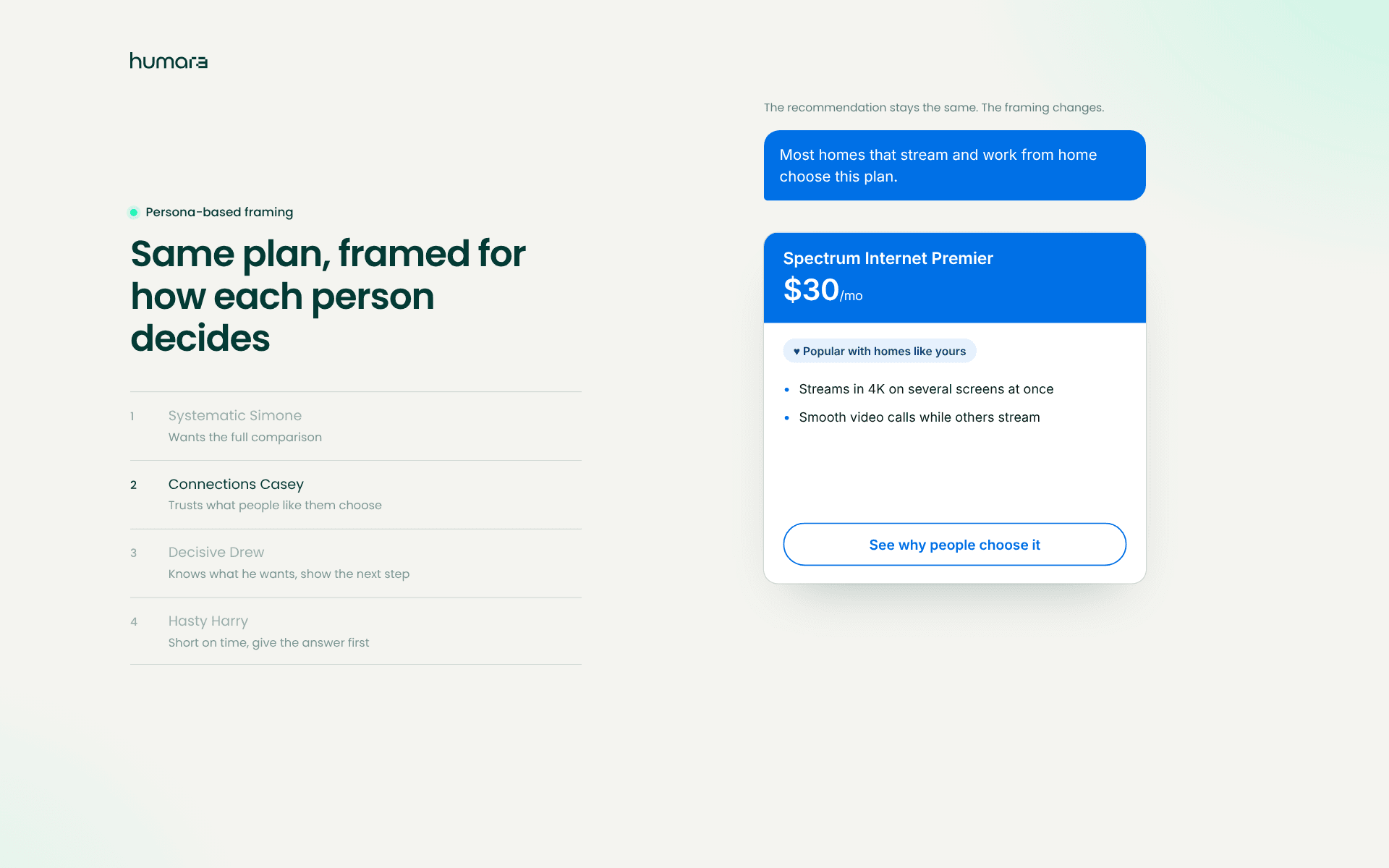
So we defined the phases a conversation would move through, early on. Once those existed, patterns followed, because certain moments always came round. The product card was the clearest, and the one we spent most time on: what to surface, and what each client’s constraints would let us surface.
Later we tested a buy button directly on the recommendation card, for people who liked what they were shown but didn’t know where to go next. Conversion went up 9.05%, and people who still had doubts kept reaching the part of the conversation that handled them.
Design for what you know
We pivoted before the big players had set any patterns. There was no playbook for LLM interfaces yet. They filled most of it in later.
Every brand also had a different dataset, so the content itself was never ours to control. What we could control was smaller and more useful: where brand colours went, where the feedback form sat, and whether whatever landed on screen was easy to read.
That became the rule for Humara. Design what you know properly, then take it from there. Most of the AI patterns everyone uses today didn’t exist when we started. We built ours anyway.
The main outcome was the agent itself. We designed it from the first version onwards and got it live on Spectrum’s site while LLM interfaces were still new. Along the way we set up the patterns to keep building on: the phases of a conversation, the product card, the checkout button, how the agent shows up on a page. We were talking to other brands too, so we started trying out their colours, and those patterns became components we could reskin.
We got there by testing a lot, in usability tests and split tests: opening messages, prompt chips, recommendation framing, the checkout button. A few of the results are below.
The impact
- +58.1% opening message rate
- 81% of people picked a pre-set answer
- +40.2% people sending three or more messages
- +9.05% conversion, from a buy button on the recommendation card
Context
After LLMs took off, 15gifts pivoted from its Guided Selling Engine to an AI sales agent and became Humara. The agent lives on a brand’s own site, and went live on Spectrum’s.
Objective
Get people talking to the agent without it feeling out of place on someone else’s page.
Action
A team effort, with my focus on engagement. I tested embedded and floating engagement and most variations in between, swapped the empty text box for tappable answers, and defined the phases a conversation moves through, starting with the product card.
Outcome
We designed an AI sales agent from the first version onwards and got it live on Spectrum’s site while LLM interfaces were still new, with patterns to keep building on: conversation phases, the product card, the checkout button and engagement. We tested a lot along the way, in usability tests and split tests. The opening message rate went up 58.1%, 81% of people picked a pre-set answer, and people sending three or more messages went up 40.2%. A buy button on the recommendation card lifted conversion 9.05%.
A closer look
1 / 6
Next project
One design system for every brand on the Guided Selling Engine