15gifts (now Humara) · 2023–2026
Rebuilding the admin tool everything else ran on
Back Office is the internal tool that configures every brand on Humara’s products. I was the sole designer on it, from re-platforming the old version to shipping config split testing.
Most changes still needed a developer
Back Office controlled how the agent looked and behaved for each customer: brand colours, where it sat on the page, which pages it loaded on. Small edits were possible. Anything worth testing wasn’t. Trying a new opening question meant asking a developer, then waiting.
Humara sold on conversion. Every test that waited for a developer was a test that didn’t happen.
Five conversations, one request
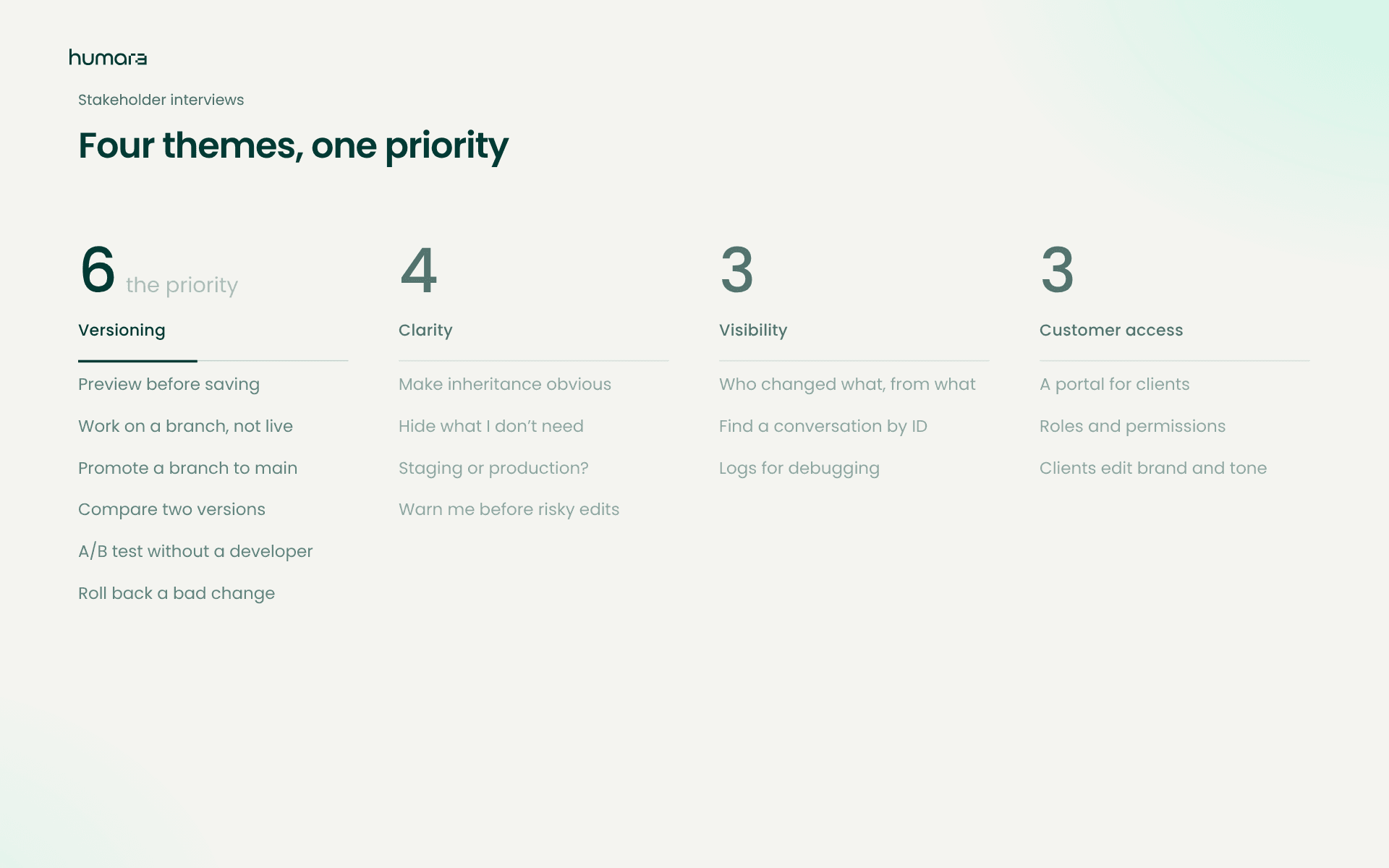
In early 2025 I ran discovery sessions with five colleagues: two product managers, our product lead, an implementation consultant and our tech lead. Each came with their own list. Roles and permissions. A clearer activity log. A customer portal. Better labels.
Four of the five also asked for the same thing in different words: branching, versioning, a safe way to try changes. Nobody had compared notes.
I didn’t have to sell the roadmap. The sessions wrote it.
Structure before features
Branching on top of messy config would only have copied the mess, so I started with the structure.
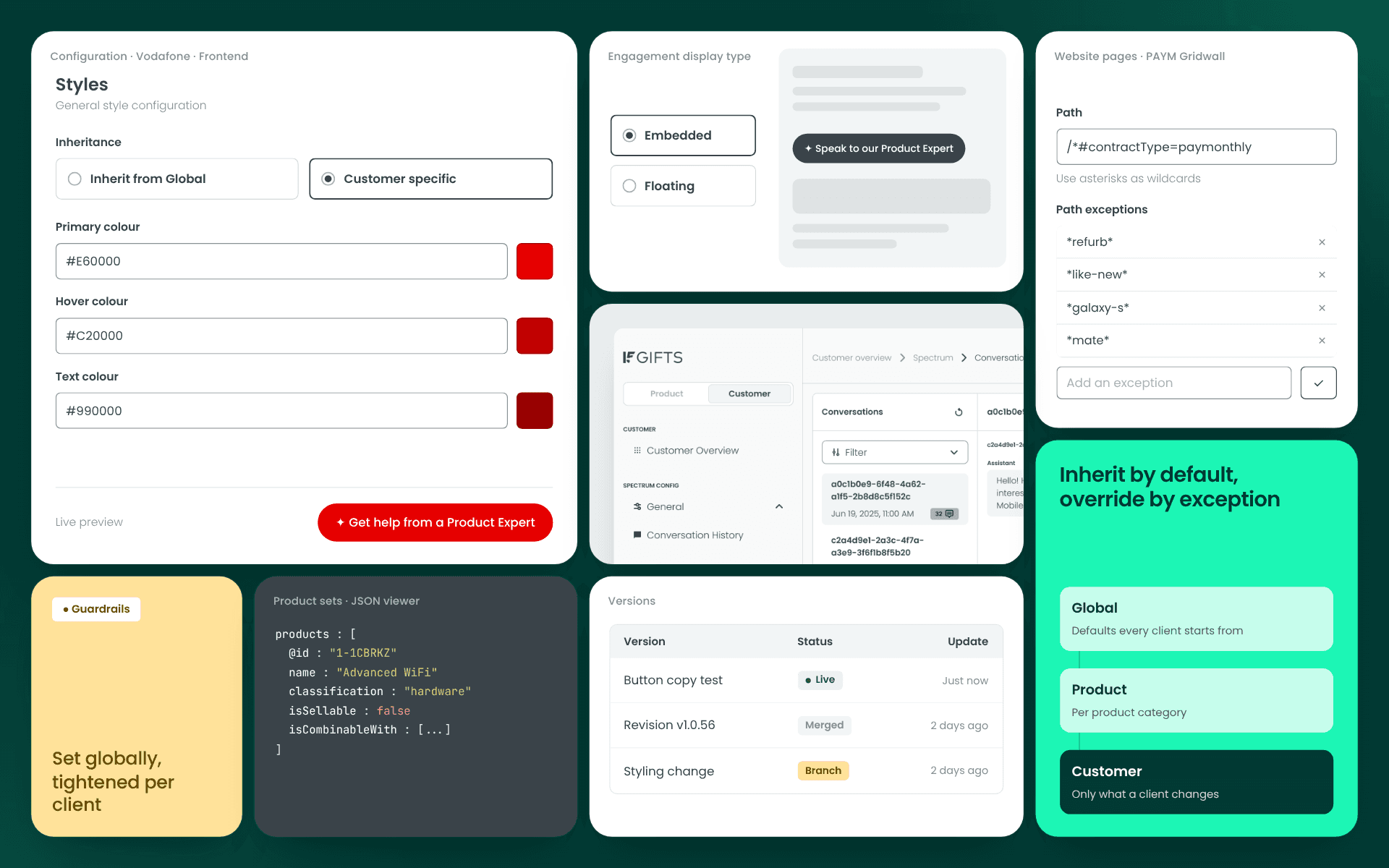
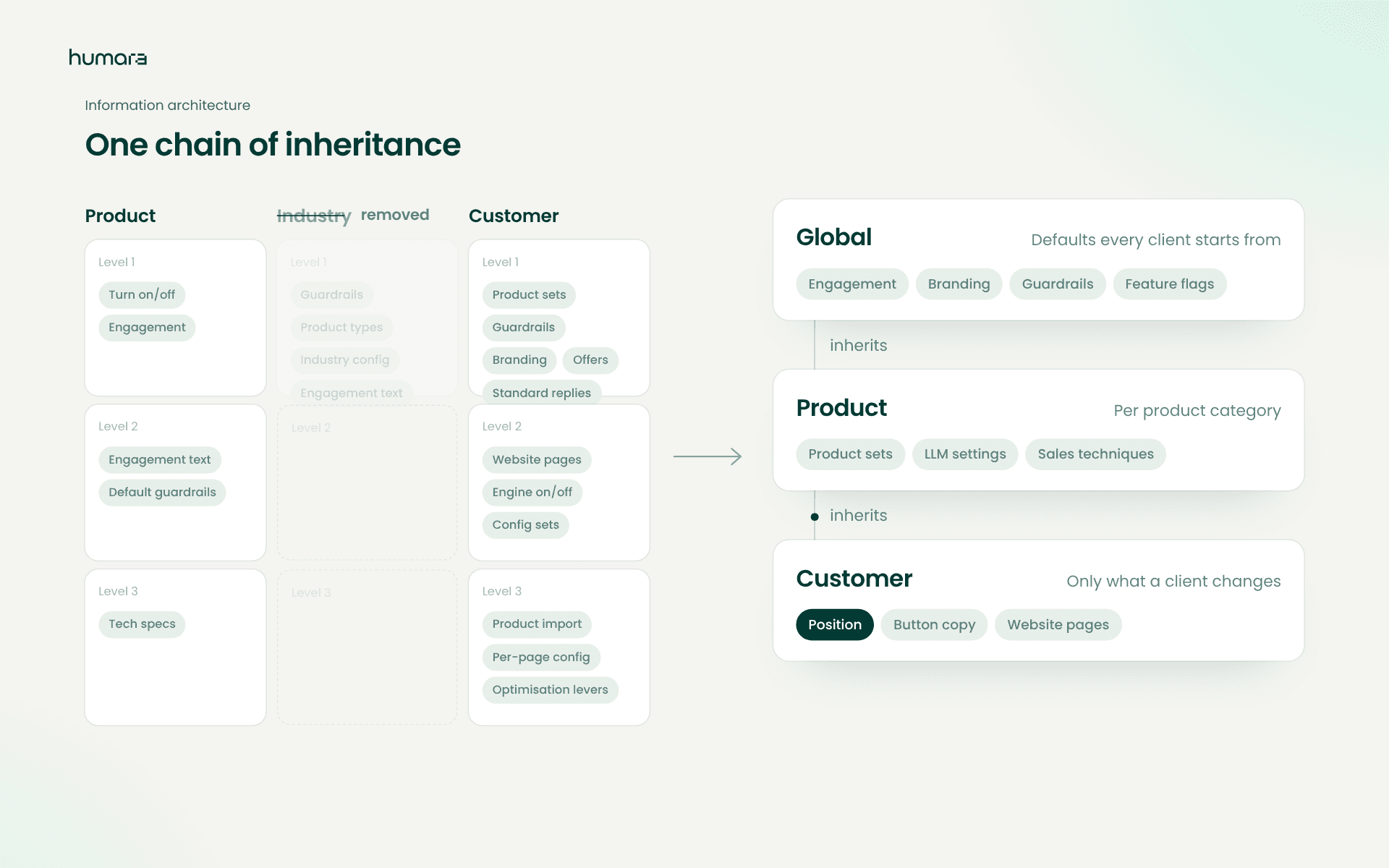
I mapped three ways config could inherit, with the trade-offs of each, and brought all three to the team. They chose a two-tier model. Product config holds the defaults every customer gets. Customer config overrides them where needed and adds customer-only settings, like which pages the agent loads on.
One change at product level now reached every customer. And because the team picked the model, they defended it too.
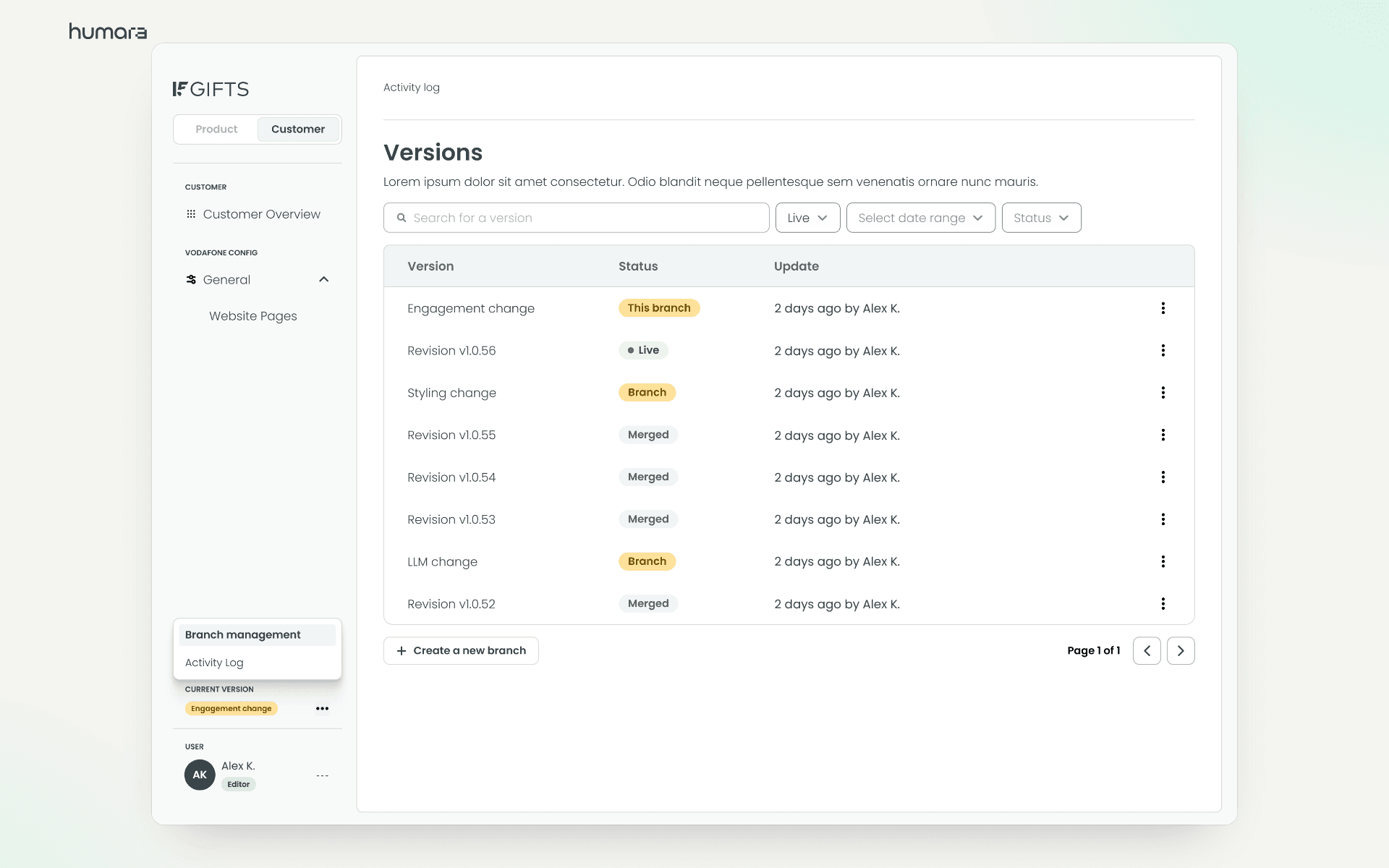
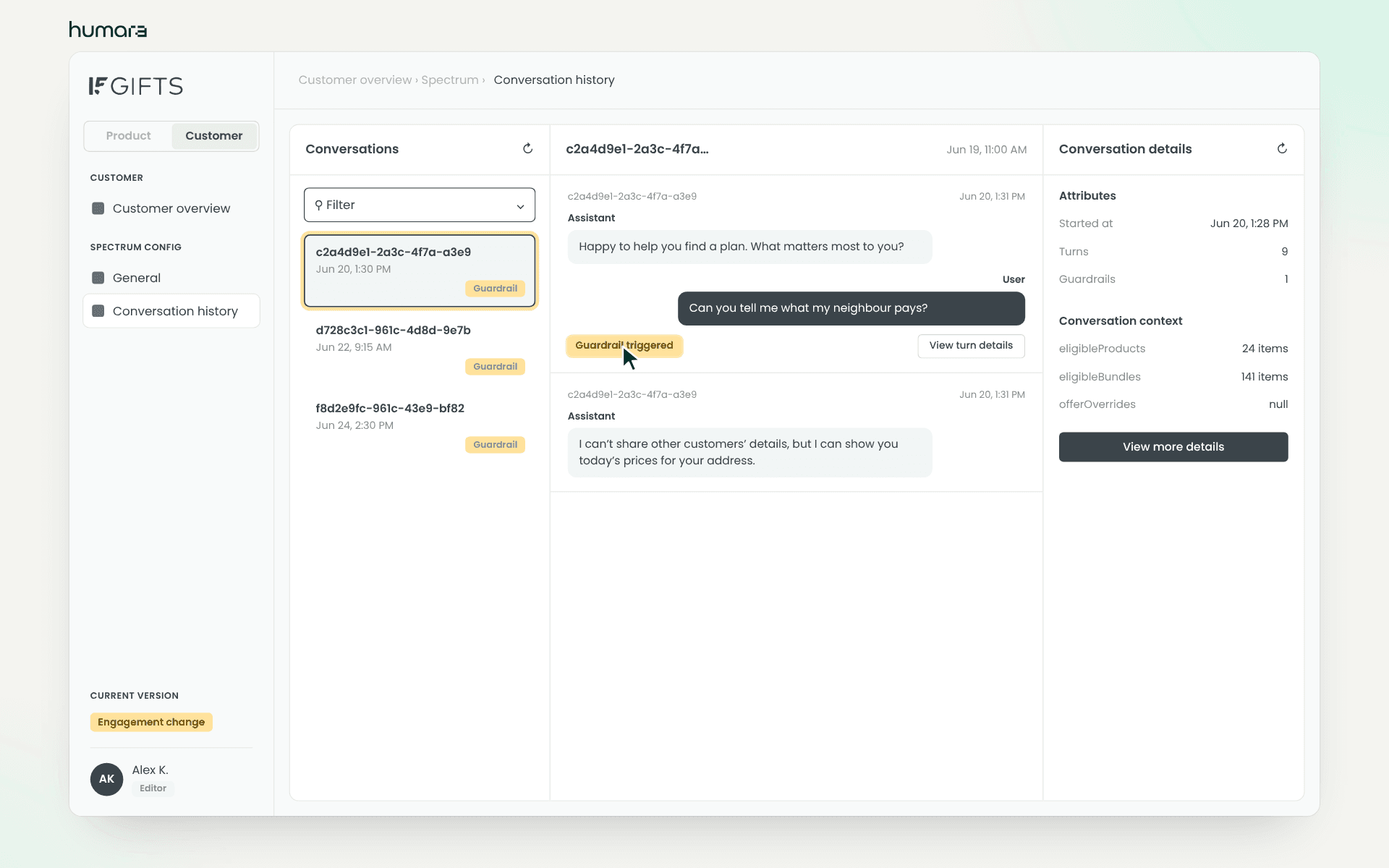
It also gave us a foundation to build on. The activity log, branching and conversation history all grew out of it.
Three developers, three approaches
Split testing stalled in an unusual way. Three backend developers each had a good approach, and every meeting went in circles.
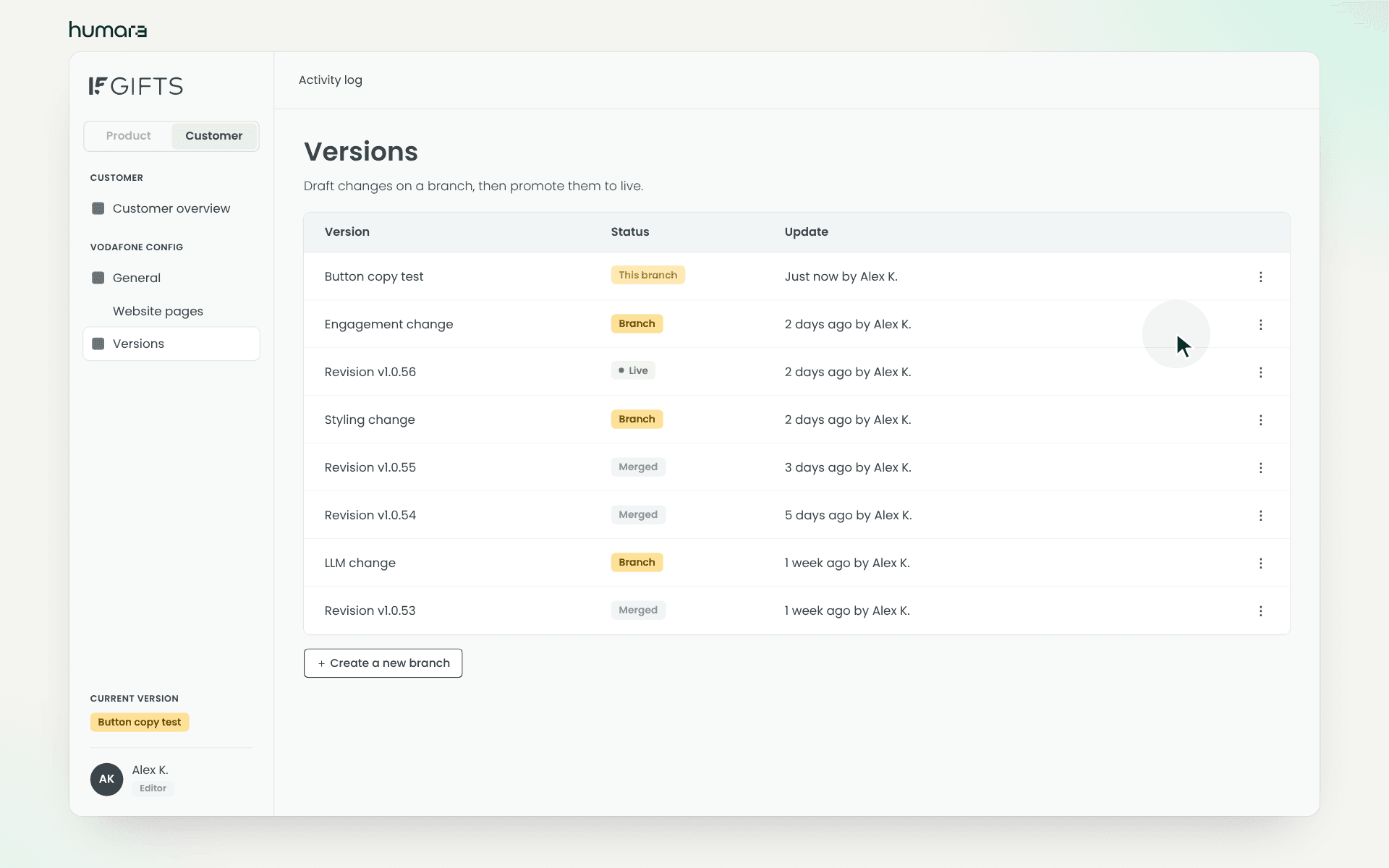
So I asked each of them to write theirs up. I compared them side by side and proposed one merged solution, built around branching as people already knew it from Figma.
An editor creates a branch of a customer’s config and makes changes inside it. They check it on the live site with a query string that only affects their own session. Then they run it in GrowthBook against main. Changes on main go live straight away. Changes on a branch only go live through a test.
The hard part wasn’t the interface. It was turning three good ideas into one.
We shipped the core, then worked through the gaps
The first release was deliberately narrow: customer config only, frontend settings first, no merge back to main and no way to compare versions. Some fields couldn’t be tested at all, so we said so in the interface rather than let editors find out the hard way.
Conversation and recommender config followed, then a tool to compare a branch with main. The unsaved changes badge I’d pushed for sat in the backlog for months before it shipped. I didn’t hold the project hostage over it.
The structure held
What lasted was the structure, more than any one feature. Everything we shipped after it sat on the same two-tier model, so one change at product level still reached every customer.
- Roughly half a day to minutes per config change
- Roughly a week to a day to onboard a new customer
- 12 config tests in three months
- 70% fewer config requests to developers
The design system paid off quietly. Around 80% of new Back Office screens were built from existing components, so developers could ship without waiting on me.
Within three months, product managers were running config tests on their own. Setting up a test went from two to three days of back-and-forth to under an hour. Most tests came from product managers and implementation consultants, the people who’d asked for it in discovery. Because every branch was checked live before it went to users, none had to be rolled back.
The faster onboarding mattered more than I expected. It didn’t win new customers. It kept existing ones happy, because their requests were done the same day.
My role
I was the only designer on Back Office and designed it from the ground up. I ran discovery, designed the config structure, the branching flow and the interface, and built the components the developers used. The backend developers designed and built the technical solution, and the launch was credited to the whole team.
What I’d do differently
Write decisions down sooner. Too many lived in meetings, and we spent time arguing them again later.
Context
Back Office controlled how Humara’s agent looked and behaved for each customer: brand colours, where it sat on the page, which pages it loaded on. Small edits were possible, but anything worth testing needed a developer.
Objective
Let the people configuring the agent change and test it themselves. Humara sold on conversion, and every test that waited for a developer was a test that didn’t happen.
Action
As the only designer, I designed Back Office from the ground up: the config structure first, then the branching flow, the interface and the components the developers built it with. The activity log, branching and conversation history were all built on that structure.
Outcome
Back Office became something the team could build on. Config had one structure, so a change at product level reached every customer and each new feature had somewhere to sit. The people configuring the agent could now change and test it themselves, and config requests to developers fell by 70%.
A closer look


Try the prototype
1 / 6
Next project
Designing an AI sales agent before the patterns existed